
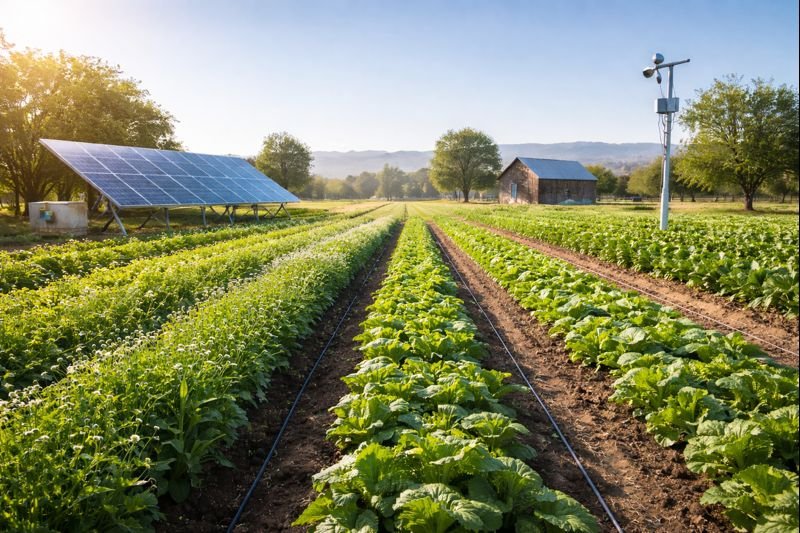
Sustainable Farming Isn’t About Spending More, It’s About Spending Smarter
For many California growers, sustainability used to sound like a compliance requirement or a marketing label. Today, it’s becoming something else entirely, a practical business strategy.
Across orchards, row crops, vineyards, and specialty production, farmers are finding that sustainable practices can lower operating costs, protect yields, and open access to premium markets. The result isn’t just healthier land, it’s stronger margins and more resilient farm operations.
Below are the sustainable methods that growers are actively using to reduce expenses and increase long-term profitability.
1. Cover Cropping: Lower Input Costs, Healthier Soil, Better Water Retention
Cover crops are no longer just about erosion control. In California’s water-constrained and high-input farming environment, they’ve become a cost-control tool.
What Growers Are Gaining
- Improved soil structure and compaction reduction
- Better moisture retention during dry periods
- Natural nitrogen contribution from legume species
- Reduced runoff and nutrient loss
Profit Impact
Many California farms report:
- $50–$100 per acre savings on fertilizer
- Improved infiltration that reduces irrigation demand
- Added forage value in mixed-use operations
Popular Cover Crops in California
- Legumes (vetch, clover) for nitrogen fixation
- Mustards for soil conditioning and pest suppression
- Grasses (rye, barley) for erosion control and organic matter
2. Precision Irrigation: Where Water Savings Become Profit Gains
Water is one of the highest operating costs for California agriculture. With rising energy costs for pumping and tightening groundwater regulations, precision irrigation has become one of the fastest ROI sustainability upgrades.
Smart Water Strategies That Pay Off
- Drip and micro-sprinkler systems
- Soil moisture sensors
- Automated irrigation scheduling
- Zone-based watering controls
What Growers Are Seeing
- 25–40% reduction in water use
- Lower energy costs from reduced pumping
- More uniform crop development
- Fewer disease issues caused by overwatering
Compliance Bonus
Precision irrigation also helps growers stay aligned with SGMA groundwater regulations and regional water management requirements, reducing future risk and regulatory exposure.
3. Integrated Pest Management (IPM): Cut Chemical Costs Without Risking Yield
IPM isn’t about eliminating crop protection; it’s about using it only when and where it’s needed.
By combining monitoring, biological controls, and targeted applications, growers are reducing unnecessary sprays while protecting beneficial insect populations.
Benefits That Show Up in the Budget
- 30–50% reduction in pesticide costs
- Lower resistance development over time
- Improved pollinator and predator insect presence
- Stronger compliance with buyer and export standards
Tools That Make IPM Work
- Field scouting programs
- Digital pest monitoring platforms
- Threshold-based spray scheduling
- Drone and precision application services
4. Soil Health Management: The Long-Term Profit Multiplier
Healthy soil reduces dependency on almost every major input, such as water, fertilizer, and corrective treatments.
What Healthy Soils Deliver
- Increased organic matter
- Better nutrient availability
- Improved root development
- Higher water-holding capacity
Why This Matters Financially
- Lower fertilizer and amendment costs
- Reduced crop stress during heat and drought
- More consistent yields year over year
- Stronger land valuation over time
Many California growers now view soil health as a multi-year investment strategy rather than a seasonal practice.
5. Renewable Energy: Stabilizing Farm Energy Costs
Solar and on-farm renewable energy systems are becoming a financial hedge against rising utility rates.
Where Farms Are Using Solar
- Irrigation pumps
- Cold storage
- Shop buildings
- Office and processing facilities
Financial Advantages
- Lower monthly utility bills
- Tax credits and incentive programs
- Predictable long-term energy costs
- Increased property value
For operations with high energy use, solar often becomes profitable within a few seasons — especially when paired with irrigation upgrades.
6. Sustainable Certification: Turning Practices Into Premium Pricing
Sustainability doesn’t just cut costs; it can increase revenue per unit sold.
Market Opportunities
- Organic certification premiums: 20–50%
- Sustainable and regenerative labels: 10–20%
- Priority access to major buyers and exporters
- Direct-to-consumer branding advantages
Large buyers and food brands increasingly require traceability and sustainability documentation, turning good practices into a competitive advantage.
Real Results from California Growers
Farms that adopt a whole-system sustainability approach often report:
- 15–25% reduction in total operating costs
- 10–30% price premiums on certified crops
- Improved drought and heat resilience
- Stronger long-term soil productivity
- Better access to contracts and high-value markets
The Shift in Mindset: Sustainability as a Business Strategy
The most successful growers don’t treat sustainability as a checklist. They treat it as an operating model, one that:
- Reduces long-term risk
- Stabilizes costs
- Strengthens buyer relationships
- Protects land value
When paired with good service providers, modern equipment, and data-driven planning, sustainable farming becomes less about compliance and more about competitive advantage.
Helpful Resources for Growers
These organizations provide tools, research, and programs that many California farms use:
- UC Agriculture & Natural Resources (UC ANR) — Research on soil health, IPM, and water management
https://ucanr.edu - California Department of Food & Agriculture (CDFA) — Grants, sustainability programs, and certification resources
https://www.cdfa.ca.gov - USDA Natural Resources Conservation Service (NRCS) — Cost-share programs for conservation and irrigation upgrades
https://www.nrcs.usda.gov - CalCAN (California Climate & Agriculture Network) — Climate-smart ag funding and policy updates
https://calclimateag.org
Final Thought for Growers
Sustainable farming doesn’t mean sacrificing profit. In many cases, it’s how California farms are protecting their margins, strengthening their land, and staying competitive in a changing agricultural market.
The key isn’t doing one thing. It’s building a system that works together: soil, water, energy, crop protection, and smart service coordination.