Why Bee Pollination Matters in California Agriculture
In California, bee pollination isn’t a luxury; it’s a core part of crop production for many of our high-value crops. Some crops, such as almonds, cannot set a commercially viable crop without bees. Other tree fruits, berries, and vegetables also depend on those tiny workers moving pollen from flower to flower in just the right window of time.
Pollination by bees contributes to higher yields, better fruit set, and more reliable crop quality, as opposed to relying on wind or chance, which rarely yields good results in intensive agriculture.
When Does Bee Pollination Start in California?
Almonds: The Early Season Kickoff
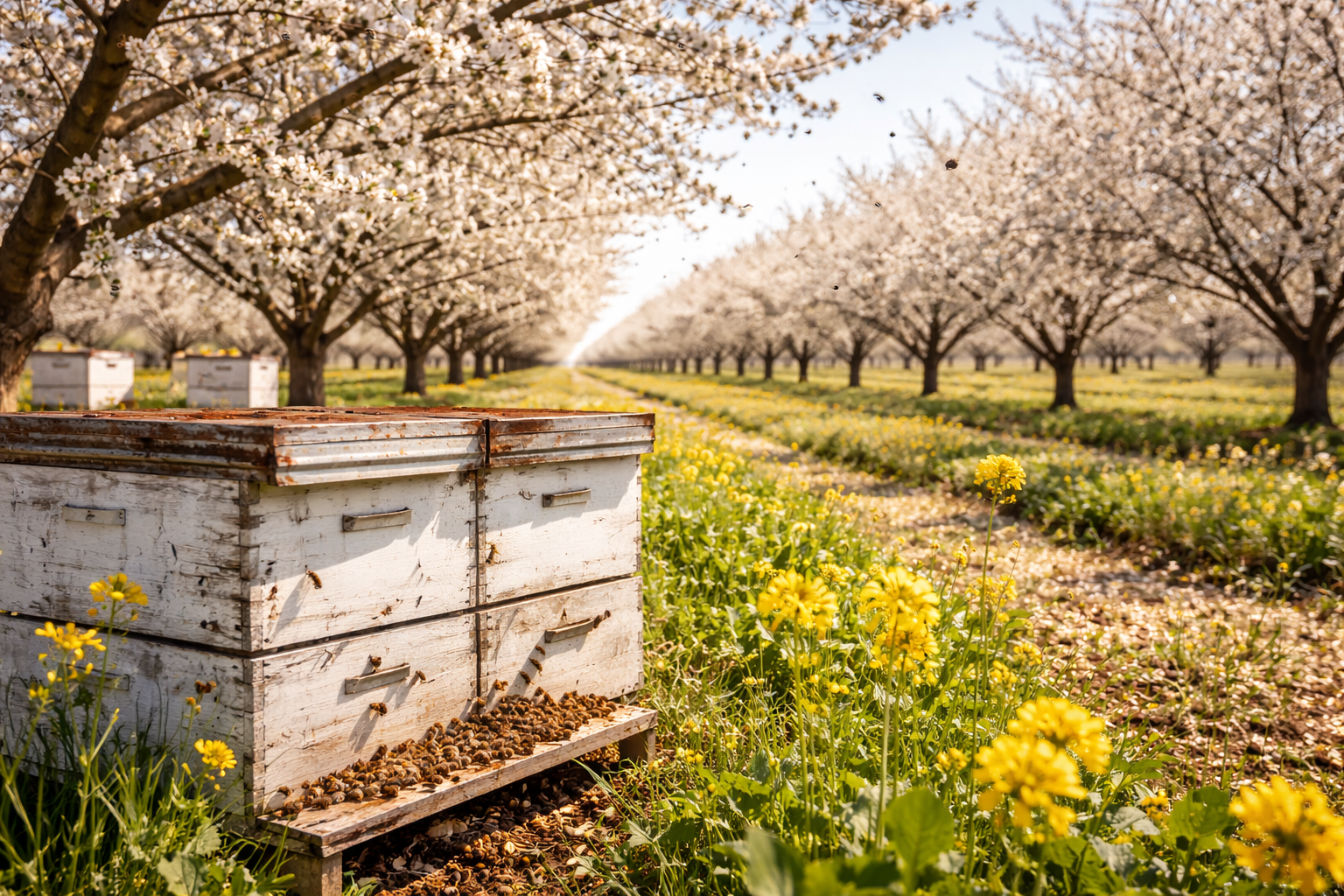
For most of the Central Valley, the managed bee pollination season begins in mid-to-late February, centered around the almond bloom. Almond trees typically start flowering around Valentine’s Day and continue through early to mid-March.
Commercial beekeepers start moving hives into California holding yards in late January, then into orchards once bloom reaches about 10 percent.
This timing supports both:
- Bees arrive when there’s enough bloom to keep them in the orchard
- Growers ensure they don’t pay for bee service before flowers are ready
The recommended general rule on almonds is two colonies per acre to achieve good pollination coverage.
Tip for growers: Getting bees in just before the first bloom and holding them through peak bloom greatly improves fruit set and yield.
Beyond Almonds: Other Crops
While almonds set the tone, a wide range of tree fruits and specialty crops also rely on bee activity once their flowers open later in the season.
Crops like:
- Cherries
- Apples
- Pears
- Blueberries
- Plums
- Many berries
- depend on insects, especially bees, for commercial pollination success.
Because bloom windows vary by crop and location, growers should plan with their crop advisors and beekeepers well ahead of time.
Common Questions Farmers Are Searching For
How Long Should Bees Stay in the Orchard?
Bees are most effective when flowers are fully open and receptive. Typically, the optimal pollination period is brief, a few days to a couple of weeks, centered on peak bloom.
For almonds, growers often keep hives through mid-March, but communication with your beekeeper on when to remove bees is critical, leaving bees in too long can expose them to pesticide risks or reduce their effectiveness in future contracts.
How Many Hives Do I Need?
For almonds, two hives per acre is the conventional benchmark most growers target.
Other crops will have different recommendations; cherries and apples typically require high hive densities to ensure consistent cross-pollination. Your local PCA or crop advisor can help dial in the right number based on orchard age and variety.
Can Wild Bees Do the Job by Themselves?
While native pollinators like bumble bees and solitary bees are part of the ecosystem, managed honey bees provide the bulk of pollination services for California agriculture because wild populations usually cannot cover the sheer acreage of high-demand crops.
Practical Tips for Successful Pollination Services
1. Plan Early With Your Beekeeper
Pollination isn’t a last-minute purchase. In many cases, beekeepers are booking orchards months in advance because demand is high nationwide.
Talk about:
- Arrival dates
- Minimum hive strength (frames of bees and brood)
- Orchard access and placement logistics
- Pesticide schedules during bloom
Communication upfront can prevent missteps during critical bloom windows.
2. Know Your Bloom Stages
Move bees in when your trees are at about 10 percent bloom and hold them through peak and post-peak bloom.
Leaving bees in too early or too long reduces their pollination efficiency and can expose them to pesticide drift or poor forage conditions.
3. Manage Spray Programs Around Bees
When bees are active in the orchard, avoid spraying during the day. Schedule contact pesticide applications for the late afternoon or evening when bees are less active.
4. Track Bee Activity With Bee Hours
Bee hours, time when temperatures are warm enough and winds are calm, are useful for planning spray windows and assessing pollination progress. Tools like regional dashboards can help you track bee hours and bloom overlap.
5. Protect Bee Health
Healthy hives do better work. Ask your beekeeper about mite management, nutrition, and the condition of queens before bloom. Beekeepers often prepare hives months in advance to withstand winter and bloom stress.
Why Pollination Planning Pays Off
Failing to secure timely and effective pollination can mean:
- Reduced fruit set
- Lower yields
- Spotty or uneven crops
- Increased cost per unit produced
In California, pollination services, especially for almonds, are a major annual investment, with millions of hives moved across the country to meet demand.
A well-executed pollination plan can maximize your crop’s genetic potential, improve yield uniformity, and even support better overall orchard health.
Key Takeaways for Growers in 2026
- Bee pollination in California typically starts around mid-February for almonds and extends into spring for other crops.
- Don’t wait to book pollination services; growers and beekeepers coordinate months ahead.
- Move bees in at the right bloom stage and schedule operations to protect bee activity.
- Plan spray programs around bee activity windows to avoid harming foragers.
- A good pollination partnership improves yields and protects your investment.