
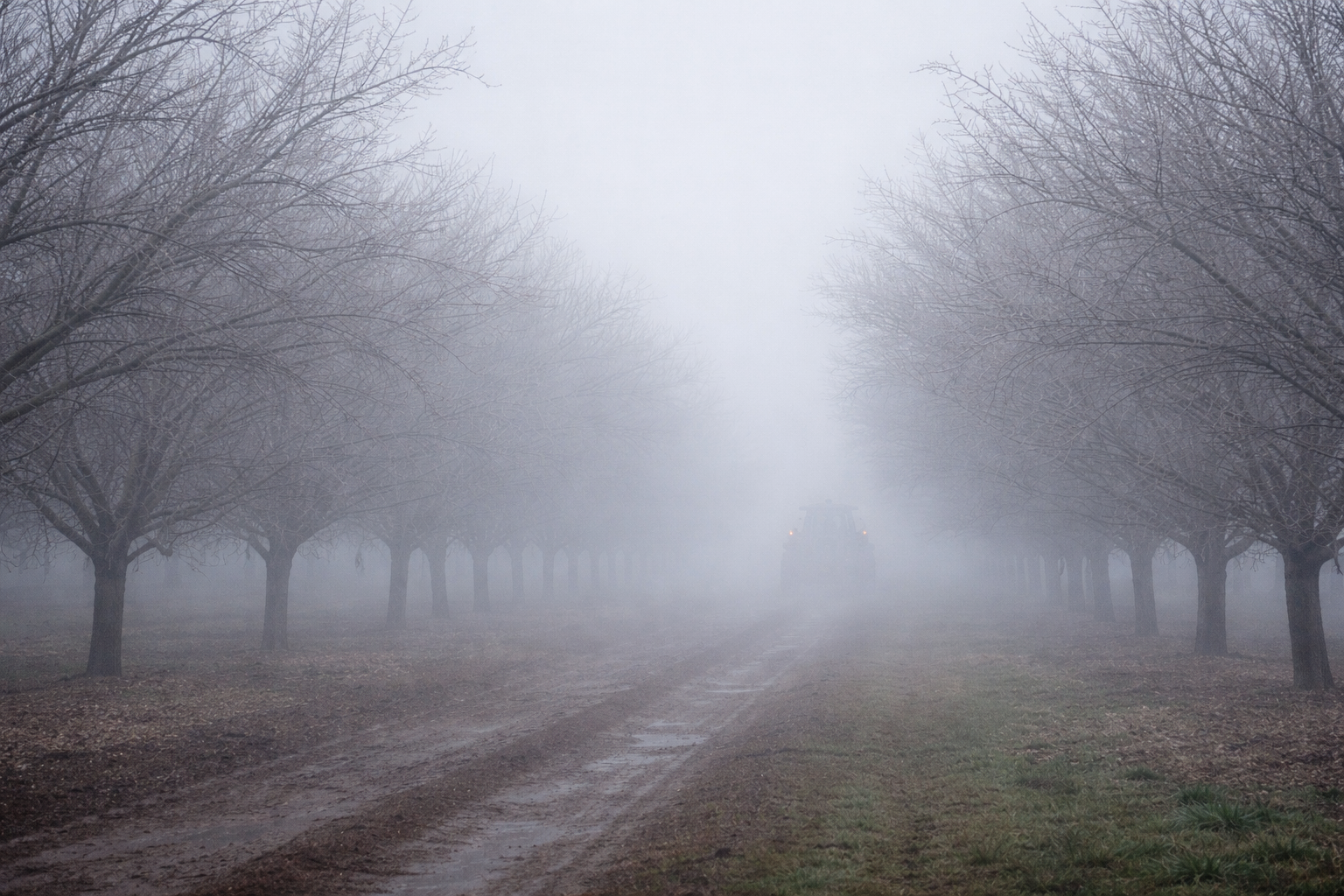
If you’ve been up before sunrise in the San Joaquin and Sacramento Valleys lately, you’ve likely seen it, that thick, lingering fog that blankets the landscape and chops visibility down in the fields. But for those of us in agriculture, this isn’t just a backdrop to the commute. It’s a weather pattern with real effects on crop development and farm operations.
What Is Tule Fog?
What we call Tule fog is a type of radiation fog that forms when moist air near the ground cools rapidly after rain or cool nights, and lighter winds keep that cold layer trapped in the valley floor. This fog season typically runs from late fall to early spring and can last for hours or even days on end.
1. Fog Helps Accumulate Winter Chill Hours
Many of the trees we grow, almonds, walnuts, pistachios, cherries, and other deciduous fruit and nut crops, depend on a dormant winter period with cool, consistent temperatures to set healthy buds and ensure strong yields in the spring.
Dense fog and the cooler conditions that bring it help keep nighttime and early-morning temperatures in the right range to accumulate these chill hours. In fact, researchers have shown that fog contributes to longer and cooler conditions, which are important for fruit and nut trees to go fully dormant.
Without enough chill, trees can wake up too early or unevenly, leading to late-season messes and lower yields.
Pro tip for growers: Track chill hours closely this year. If fog starts tapering off or days warm up early, you might need to adjust pruning schedules, bloom timing checks, and spray plans.
2. Fog Can Affect Soil Moisture & Irrigation Needs
The thick fog we’re seeing right now isn’t just water vapor in the air; it’s a sign that humidity is high and evaporation is lower. That translates to soils holding moisture a bit longer and plants losing water more slowly through their leaves.
Studies on fog shading, especially in agricultural settings, show that during foggy conditions, plant water use efficiency can change because less direct sunlight reaches the crop canopy. That often means less need for irrigation early in the morning or on unbroken fog days.
Quick farm tip: Monitor moisture probes or soil sensors closely. If fog lingers through the day, you may be able to dial back early irrigation and save water without stressing crops.
3. Less Sunlight, Slower Photosynthesis
There’s a trade-off to all that moisture and shade. When fog hangs around all morning, less sunlight reaches the plants, which can slow early photosynthesis and vegetative growth, particularly for winter greens and cover crops that depend on daylight for energy.
While this usually isn’t a big issue for dormant orchards, it can matter for winter vegetables or starting annual crops, where delayed growth means slower leaf development and potentially delayed maturity.
Practical advice: If you notice repeated foggy spells, plan fieldwork and crop staging around the sunniest parts of the day and adjust fertilizer or irrigation timing to match actual light conditions.
4. Visibility Challenges & Field Work Planning
Fog in the Central Valley isn’t just a farm issue, it’s a safety issue. Visibility can drop to near-zero on county roads and field access routes in the early morning, which slows down crews and machinery movement and increases risk.
It’s worth reminding crews and contractors to:
- Use lights and slow travel speeds in foggy conditions.
- Delay low-sunrise starts if visibility is under ~200-300 feet.
- Communicate frequently via radio if working in dense fog patches.
Even experienced teams get surprised by how quickly dense fog can set in or lift.
5. Long-Term Shifts in Fog Patterns
Interestingly, while we’re seeing thick fog this season, long-term studies show that Central Valley fog, and the cumulative winter chill that comes with it, have been decreasing over the past several decades. Scientists attribute this to changes in pollution, climate warming, and atmospheric dynamics.
While that’s a bigger climate conversation, it’s something growers are watching because it affects:
- Future chill hour reliability
- Orchard selection and cultivar planning
- Long-range irrigation and frost/freeze management strategies
Final Takeaway for Growers
Fog isn’t just morning scenery, it’s a weather phenomenon with real agricultural impacts. For orchard growers and field producers alike, understanding how fog affects chill hours, soil moisture, sunlight availability, and field operations can help you make better decisions in the coming weeks.
Keep an eye on your local forecasts, adjust irrigation and spray timing based on actual conditions, and always plan fieldwork around safety when visibility is low.