
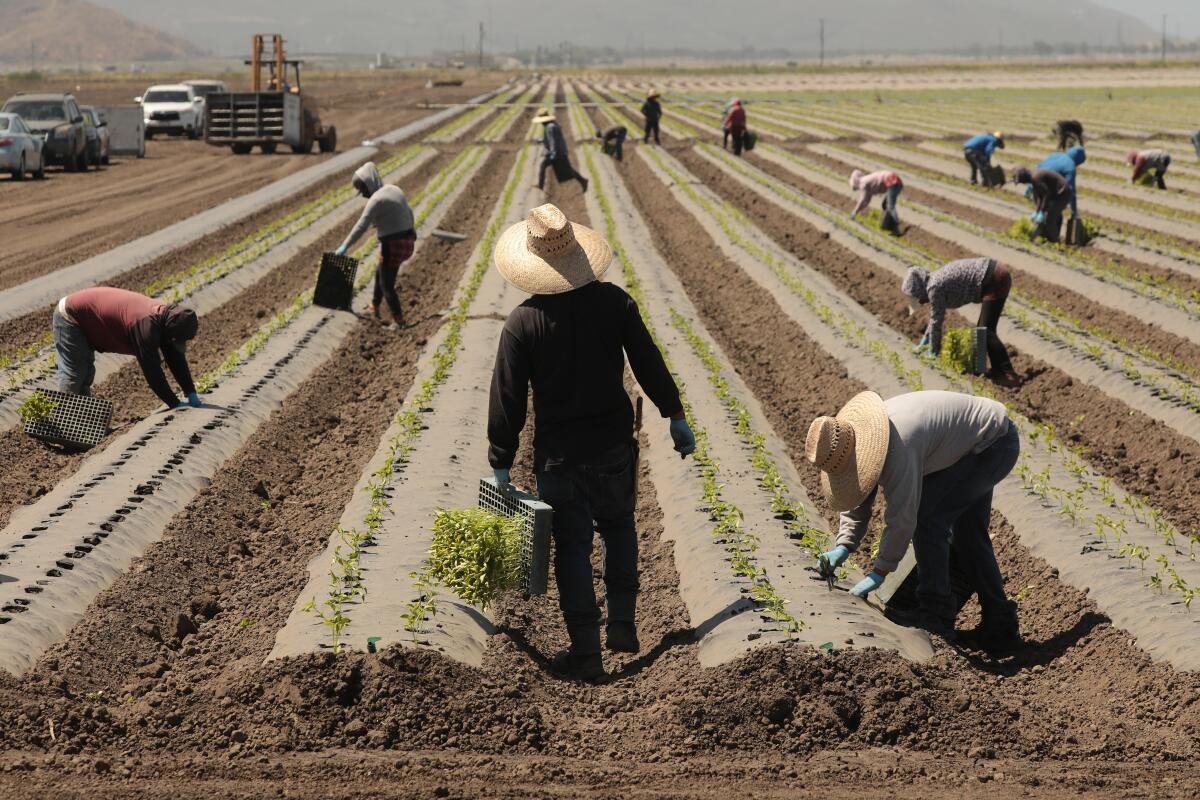
California agriculture is facing one of its most complex labor periods in decades. From tightening labor availability and rising wages to regulatory pressure and uncertainty around immigration enforcement, growers are being forced to rethink how they staff their operations. For many farms, the challenge is no longer just finding workers; it’s finding reliable, compliant, and scalable labor solutions that can adapt year to year.
Understanding where agricultural labor is headed and how to plan for it is becoming just as important as managing water, inputs, and equipment.
California’s Agricultural Labor Shortage Is Structural, Not Temporary
Labor shortages in agriculture are no longer seasonal anomalies. They are structural and ongoing.
Across California, growers report difficulty filling positions during planting, thinning, harvest, and post-harvest work. Fewer domestic workers are entering farm labor, and experienced crews are aging out of the workforce faster than they are being replaced. At the same time, competition between farms, processors, and labor contractors has intensified.
Wages have continued to rise as a result. Over the past several years, farmworker pay in California has increased significantly, driven by minimum wage increases, overtime rules, and basic supply-and-demand pressure. For growers, this means higher labor costs and tighter margins—even in strong commodity years.
Immigration, ICE Enforcement, and Workforce Uncertainty
Immigration policy continues to be one of the biggest sources of uncertainty in agricultural labor. While agriculture relies heavily on immigrant labor, ongoing concerns around enforcement actions, documentation requirements, and compliance audits have created anxiety for both employers and workers.
Many growers are searching for clarity around:
- Employer responsibilities during audits or inspections
- How labor contractors handle verification and compliance
- Reducing exposure to regulatory risk
This environment has made working with professional, compliant labor contractors more important than ever. Farms want to focus on production, not navigating immigration law or enforcement issues.
The Growing Role of Licensed Agricultural Labor Contractors
As labor complexity increases, more farms are turning to licensed agricultural labor contractors to manage seasonal crews. Contractors provide trained workers, handle payroll and compliance requirements, and help farms scale labor up or down as workloads change.
For growers, labor contractors can offer:
- Faster access to experienced crews
- Reduced administrative and compliance burden
- Flexibility during peak demand periods
- Better continuity when labor availability shifts
This is why searches for agricultural labor contractors, farm labor services, and harvest labor providers continue to increase across California.
H-2A Programs: Useful, But Not Simple
The H-2A temporary agricultural worker program continues to expand, offering a legal pathway to bring in seasonal workers when domestic labor is unavailable. However, H-2A is not a turnkey solution.
Growers researching H-2A are often weighing:
- High upfront planning and paperwork requirements
- Housing and transportation obligations
- Wage rate requirements tied to state averages
- Timing risks if approvals are delayed
For some operations, H-2A fills a critical gap. For others, it works best when combined with labor contractors or permanent crews. Most successful farms treat H-2A as one tool, not a complete labor strategy.
Technology Is Reducing Labor Dependence, But Not Eliminating It
Automation and mechanization are helping farms reduce labor pressure, but they are not replacing people entirely. Adoption has accelerated in areas where the return on investment is clear, especially in operations facing chronic labor shortages.
Common labor-saving technologies include:
- Mechanized and semi-mechanized harvest equipment
- Automated irrigation and fertigation systems
- Precision equipment that reduces crew size per acre
- GPS-guided tractors and implements
These tools allow farms to do more with fewer workers, but most still require skilled operators and support crews.
Workforce Retention Is Becoming a Competitive Advantage
As labor becomes harder to replace, many farms are shifting focus from hiring to retaining experienced workers. Growers investing in workforce stability are seeing benefits in productivity, quality, and reliability.
Retention strategies increasingly include:
- Competitive wages and predictable schedules
- Improved housing and transportation support
- Training and advancement opportunities
- Safer and more efficient working conditions
In today’s environment, keeping a good crew can be more valuable than finding a new one.
Planning for the Future of Agricultural Labor
The future of agricultural labor in California will not rely on a single solution. The farms best positioned to succeed are adopting hybrid approaches that balance people, partners, and technology.
Successful operations are combining:
- Core year-round staff for key roles
- Seasonal labor through trusted contractors
- Strategic mechanization where it makes sense
- Proactive planning around compliance and timing
Labor will remain one of the most important and challenging. inputs in agriculture. Farms that treat labor planning as a strategic priority, rather than a last-minute scramble, will be better equipped to adapt as conditions continue to change.
How Agnomy Supports Modern Farm Labor Needs
Agnomy helps growers connect with verified agricultural labor contractors and service providers who understand today’s labor realities. By improving visibility, availability, and coordination, Agnomy makes it easier to find compliant labor solutions when timing matters most, without relying solely on word of mouth or last-minute calls.